
Glaucoma

Glaucoma Is a Leading Cause of Blindness in the United States. An Early Diagnosis Can Help Preserve Your Vision.
“Glaucoma” is a group of diseases that affect internal eye pressure, which damages the optic nerve. Most forms of this “silent thief” of sight do not display symptoms until severe damage has occurred. While the resulting vision loss is irreversible, an early diagnosis makes it possible to control the disease and prevent damage.
Dr. Sarkisian leads the glaucoma treatment team at Oklahoma Eye Surgeons. His devotion to innovation, range of expertise, and involvement in multiple FDA studies have allowed him to play a significant role in developing the latest advancements in diagnostics and treatments.



How Is Glaucoma Diagnosed?
At Oklahoma Eye Surgeons, our state-of-the-art diagnostic facility allows us to detect glaucoma in its early stages and plan for effective treatments. To deliver the most accurate assessment, your doctor will use various non-invasive tests, including computerized visual field testing, optic nerve imaging, blood flow measurement, and other advanced imaging techniques.
Your comprehensive screening may include the following:
- Tonometry to measure IOP.
- Visual Field to check for peripheral vision loss.
- Spectral Domain OCT to measure the retinal nerve fiber layer.
- Optic Disc Photography to document nerve damage severity.
- Pachymetry to measure cornea thickness.
- Gonioscopy to examine the eye’s drainage angle.

What to Know About Glaucoma
What causes glaucoma?
In healthy eyes, fluid can flow regularly in and out. This keeps the pressure inside the eyes (intraocular pressure, or IOP) normal and balanced.
Glaucoma occurs when the fluid is unable to drain, leading to a higher IOP. This buildup damages the optic nerve, the structure responsible for sending visual signals from your eyes to your brain.
What are the symptoms of glaucoma?
In most cases of chronic glaucoma, there are no symptoms until the condition has slowly progressed to a later stage. At this point, patients may notice a loss of peripheral vision, though many do not. Because early warning signs are rare, having a regular medical eye examination is crucial.
In cases of acute angle closure, a patient’s IOP rises quickly. The patient may experience severe symptoms, such as:
- Blurred vision, especially at night.
- Halos around lights.
- Severe headaches or eye pain.
- Nausea.
If you experience any of these symptoms, consult your eye doctor immediately.
What are the common risk factors for glaucoma?
Glaucoma generally affects adults over the age of 40. While anyone can develop this condition, studies show individuals at greater risk include those who:
- Are over the age of 60.
- Have a family history of elevated intraocular pressure (IOP).
- Are African-American over the age of 40.
- Are Asian.
- Are Hispanic over the age of 60.
- Have diabetes or hypertension.
- Are very nearsighted or farsighted.
- Are steroid users.
- Have had an eye surgery.
Selecting the Right Glaucoma Treatment for Your Eye Health
There are several management options, including everything from eye drops and topical medications to surgery. At Oklahoma Eye Surgeons, we specialize in a range of advanced procedures and are prepared to determine which is best for your needs, such as:
Laser Therapy
For this outpatient procedure, a surgeon uses a gentle laser to open clogged channels are release fluid buildup within the eye.
Direct Select Laser Trabeculoplasty (DSLT)
DSLT is a precise, efficient laser treatment that improves fluid drainage and lowers pressure. Oklahoma Eye Surgeons is one of the only providers in the state to offer this cutting-edge procedure.
Sustained-Release Implants
Adhering to daily eye drop regimens for glaucoma management can be challenging, and missed doses may reduce effectiveness. Sustained-release implantable pharmaceuticals, such as iDose TR and Durysta, offer an innovative alternative to traditional eye drops.
These implantable drug delivery systems are designed to release medication directly into the eye over time. For many patients, these implants lead to fewer fluctuations in eye pressure, improved treatment consistency, and a lower risk of disease progression.
Minimally Invasive Glaucoma Surgery (MIGS)
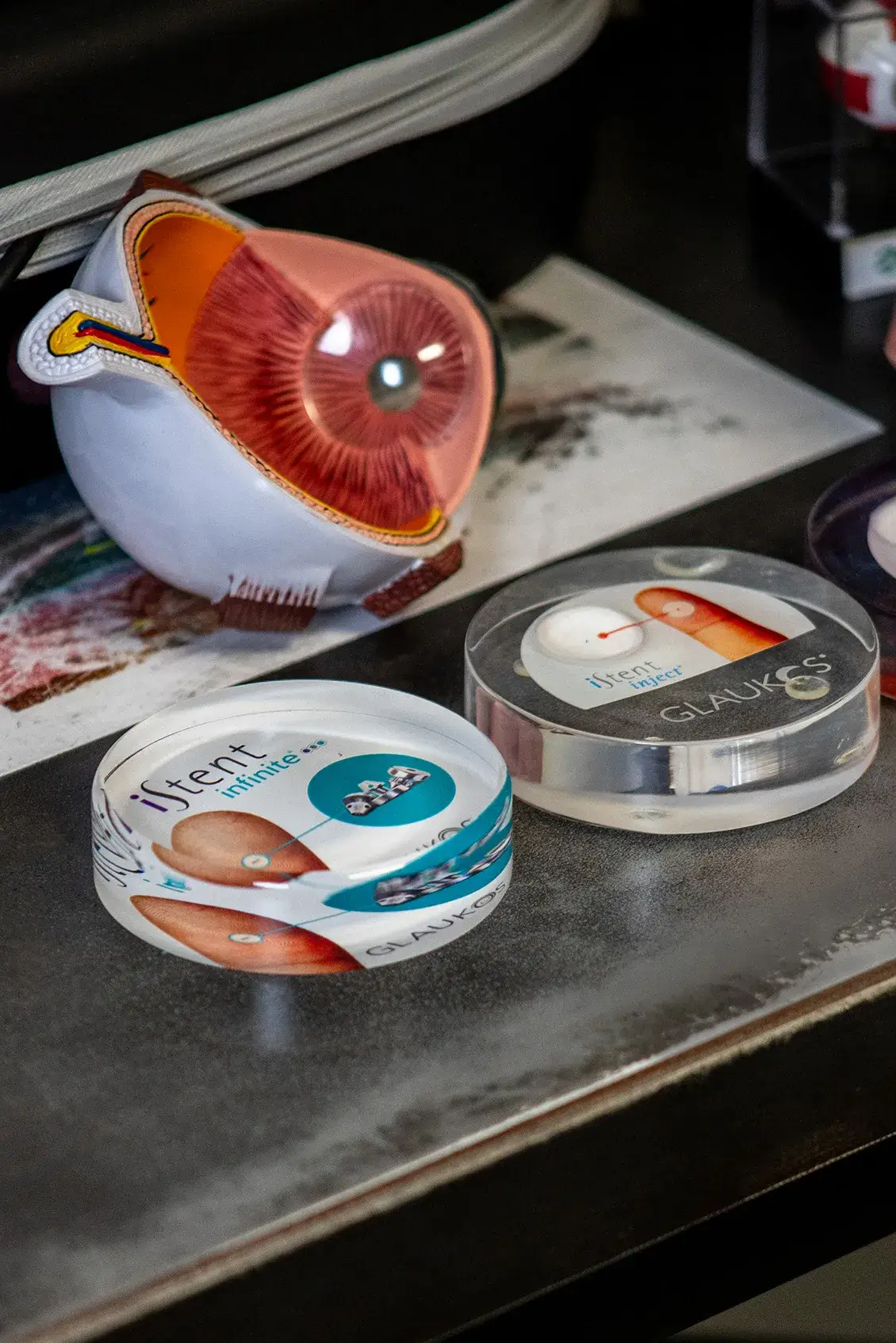
This gentle, less invasive treatment option uses microscopic equipment and tiny incisions to lower eye pressure in patients with open-angle glaucoma. MIGS has been shown to greatly decrease the need for medications, slow disease progression, and delay the need for other surgical interventions.
MIGS may also be performed at the same time as cataract surgery, allowing patients to achieve both clearer vision and a decreased IOP in one convenient procedure.
Filtration Surgery
If medication does not effectively control a patient’s glaucoma and the patient has already undergone laser treatment, filtration surgery is used to create a new passage for fluid drainage.
Glaucoma Drainage Implant Surgery
A procedure conducted to insert drainage devices into the eye to prevent the drainage openings created during filtration surgery from closing.

Find Reliable Glaucoma Care With Oklahoma Eye Surgeons
Oklahoma Eye Surgeons is dedicated to effectively managing and treating your condition. Our clinic is led by Dr. Sarkisian, who has been the first to perform many breakthrough procedures nationally and internationally. He has also trained ophthalmologists around the world in these new surgical techniques.
Our experienced team is ready to help you protect your long-term vision and eye health. To learn more about our procedures or to meet with a leading eye doctor, please contact us.